Hosting Conditions
on events, attention and gathering beyond performance

We’re very used to a particular way of gathering.
An event or performance, as it’s commonly understood, is something that happens. There’s a beginning and an end, someone or something in front, and a shared, often unspoken agreement about where attention should go. We come to listen, to watch, to witness something unfold. The value is located in what’s presented.
This format is familiar for a reason. It has shaped concerts, talks, performances, screenings, rituals — entire cultures of coming together. It gives structure, focus, and a clear orientation for attention. Over time, it has also aligned closely with ideas of entertainment and content: something offered, received, and consumed within a defined frame.
There’s nothing inherently wrong with this. It’s simply a form most of us know how to enter, how to recognize, how to evaluate.
At the same time, its dominance has had a quieter side effect. In most contemporary contexts, shared space is organized around the management of attention. Music, screens, performances, announcements, or other forms of content tend to function as the center of gravity — something to focus on, something to follow.
Within an attention-driven logic, situations where nothing is tasked with capturing attention — where presence isn’t anchored to content or performance — can feel unfamiliar, even unsettling. It’s not that these ways of being together are new or rare, but that we no longer have a clear framework for recognizing them as intentional forms of socializing or being together, in shared space.
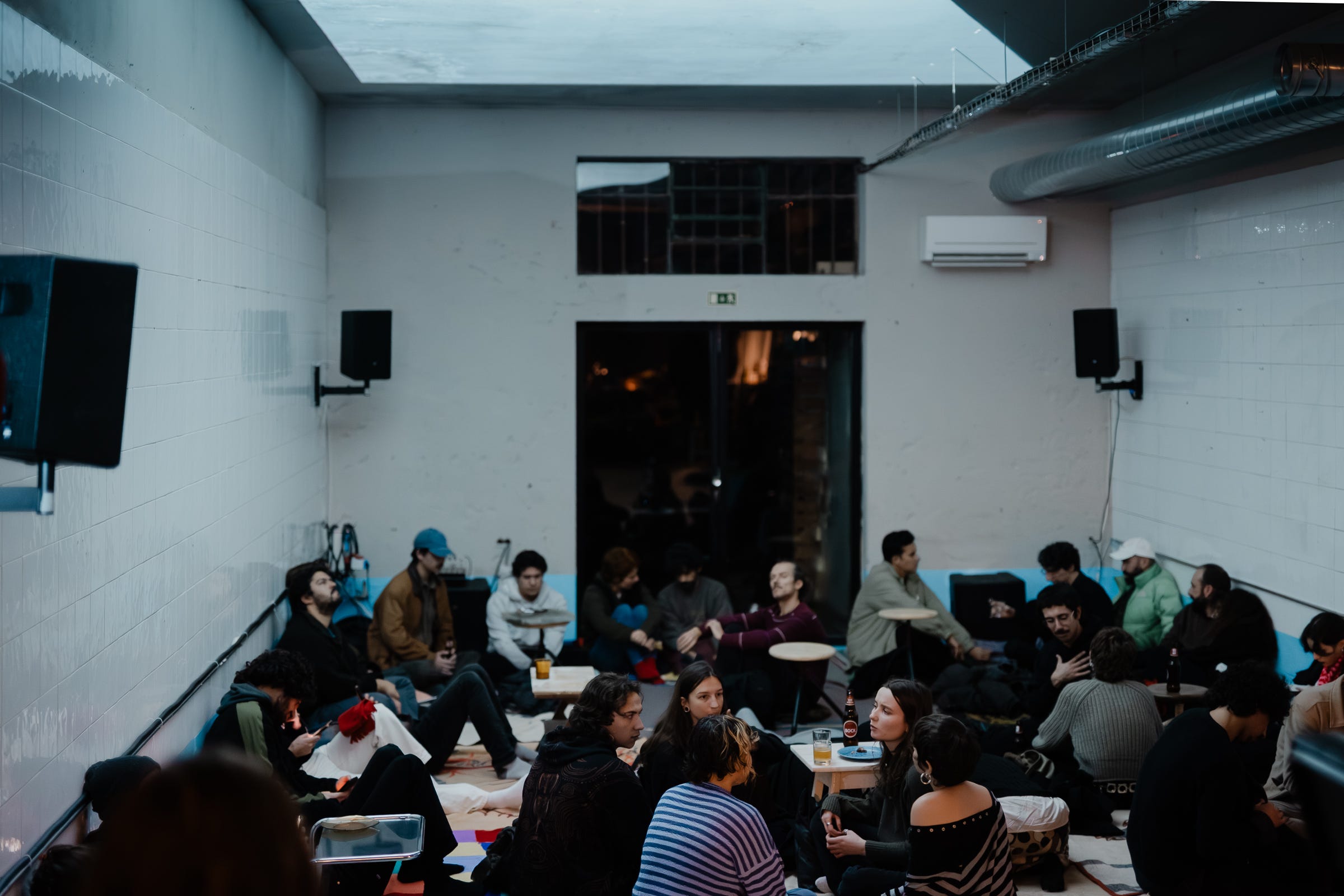
When conditions are allowed to lead
Conditions usually work quietly, as background — shaping the felt, experiential layer of a space without announcing themselves.
Most of the time, we don’t actively register them. We adapt. We adjust our posture, our voice, our expectations. A room can be too loud, too bright, too crowded, or too tense for a long time before it fully breaks into awareness — and even then, it often registers as fatigue, irritation, or withdrawal rather than as a clearly identified cause.
Supportive conditions don’t demand attention either. Not because they’re ideal, but because they don’t require immediate correction. We don’t think about the light or the acoustics. We don’t track temperature or spacing. We simply feel able to stay.
That’s why conditions are easy to overlook in general. Whether supportive or constraining, they tend to operate below the level of explicit attention — most of the time shaping behavior long before they become something we name.
In spaces where nothing is foregrounded, this background layer becomes more legible. Attention no longer has to lock onto a single point. It can soften, widen, and reorganize itself in response to the room. The body begins to register information that’s usually filtered out: the weight of sound or silence, the pace of movement, the sense of distance or closeness between people.
Not as something to analyze — just as information.
This kind of attention isn’t passive. It’s orienting. It helps the body understand where it is, how long it might want to stay, and how available it feels — to others and to itself.
When nothing needs to be followed and nothing needs to be completed, the conditions of the space — rather than a program or performance — begin to do the work.
“So… what’s the event?”
When people encounter situations like this, a familiar question tends to surface.
So… what’s the event?
It’s a reasonable question. Most of us have learned — often without realizing it — to associate value with foreground activity. Something is meant to happen. Something is meant to be presented. Attention is meant to be guided toward a focal point.
If nothing appears to be offered in that way, it can feel as though something is missing — as though we’ve arrived too early, or the main thing hasn’t started yet.
What I keep noticing, though, is that what’s missing isn’t the event itself. What’s missing is the category we’d need in order to recognize what’s actually taking place.
There’s a real difference between an
event where something happens, and
a period of time in which conditions are being hosted.
In the first, attention is actively directed: toward a person, a performance, a program, a sequence. The space is organized around following, watching, listening, or completing something. Even when the experience is subtle or quiet, attention still has a job to do.
In the second, attention isn’t given a target. Nothing is foregrounded. Instead, the space itself is calibrated so people can orient themselves — to the room, to one another, and to their own pace — without being pulled toward a single point.
This doesn’t mean nothing is happening.
It means that what’s happening is infrastructural rather than presentational.
A hosted condition doesn’t ask to be watched or listened to in the usual sense. It doesn’t require interpretation or evaluation. It doesn’t ask people to decide what it is or whether it’s good. It works at the level of pacing, density, acoustic weight, and relational ease — allowing the space and the people in it to organize themselves, often before anyone consciously notices.
The motivation, then, isn’t to come and consume something — to take it in, understand it, or follow it. It’s to arrive into a situation where attention isn’t being captured, and see what becomes possible when nothing is asking to be followed.
For some people, this feels immediately familiar.
For others, it takes a moment — a small adjustment — before the absence of a focal point begins to feel less like a lack, and more like a kind of permission.
What a hosted condition looks like
Situations like this aren’t organized around a single focal activity. Instead of content, they’re shaped by conditions: pacing, atmosphere, and how attention is allowed to move through the space.
There’s no central moment to synchronize around, and no peak that everything builds toward. People don’t need to arrive at the same time, stay for a set duration, or orient themselves toward a shared point of focus. What’s being hosted isn’t an experience to be consumed, but a set of conditions within which different ways of being present can coexist.
Because this kind of hosting doesn’t announce itself, it’s often mistaken for a lack of intention. In practice, the opposite is true. The intention simply operates at a different level — not by directing behavior or attention, but by quietly shaping the ground on which interactions unfold.
The work happens in how long people linger, how easily conversations start or stop, how the space absorbs sound, how bodies settle or keep moving. Nothing needs to be foregrounded for this to take effect.
The care is in the calibration, not the instruction.
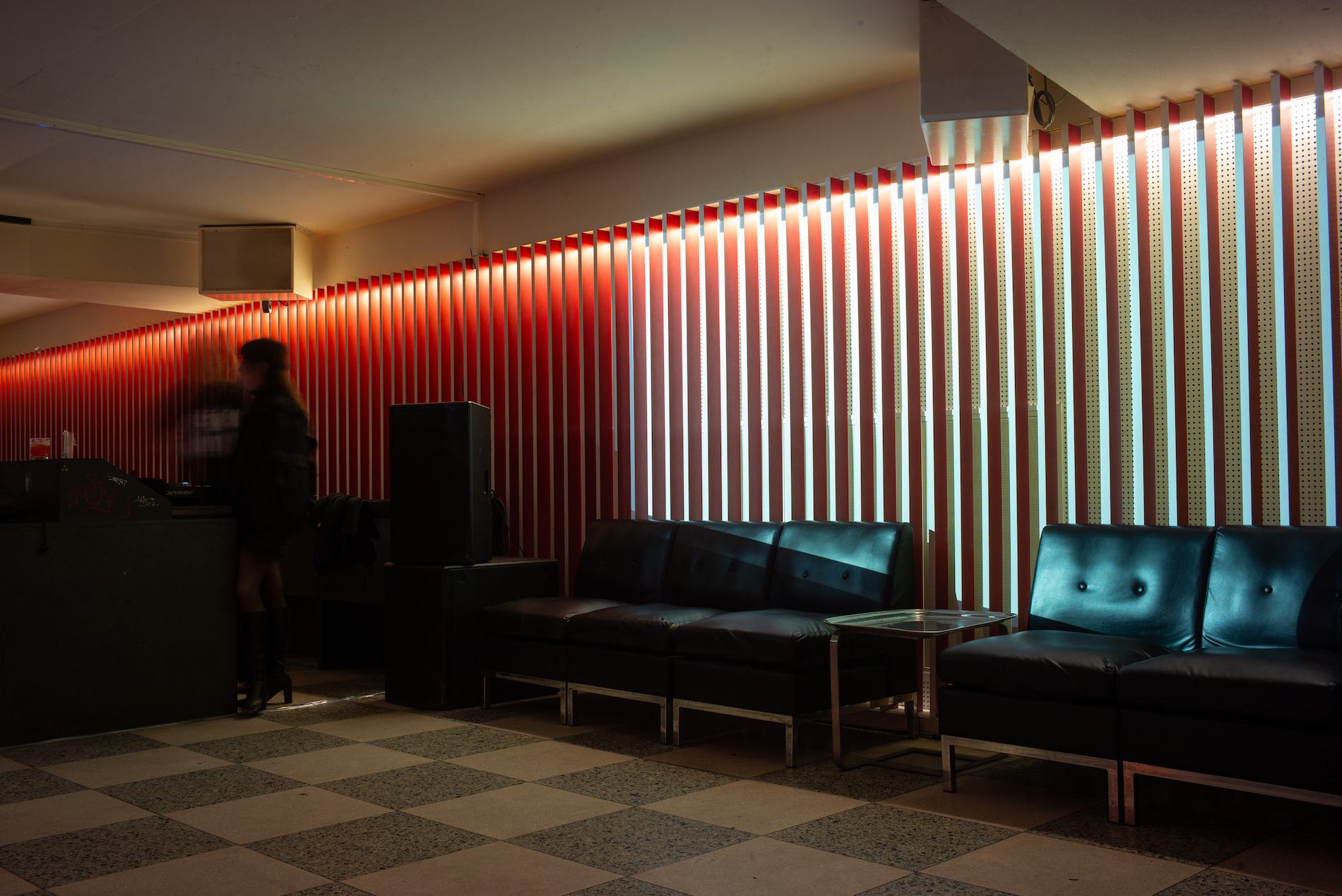
One way this is practiced
In my own work, this approach takes the form of what I call Recursive Coherence Fields™. RCFs are subtle, non-musical sound and light fields designed to operate as part of a space’s infrastructure rather than as something to look at or listen to.
They don’t function as content nor aesthetic expression, and they don’t ask for attention. They’re calibrated to sit below the level of focus, shaping pacing, acoustic density, and the overall feel of a space without directing behavior or experience. Nothing needs to stop for them to work, and nothing needs to be understood.
I think of them less as compositions or art installations and more as environmental calibration: a way of tending to the conditions under which people gather, move, speak, or remain quiet. They’re one example of how hosting conditions can be practiced — not as a spectacle, but as a form of care for the shared ground itself.
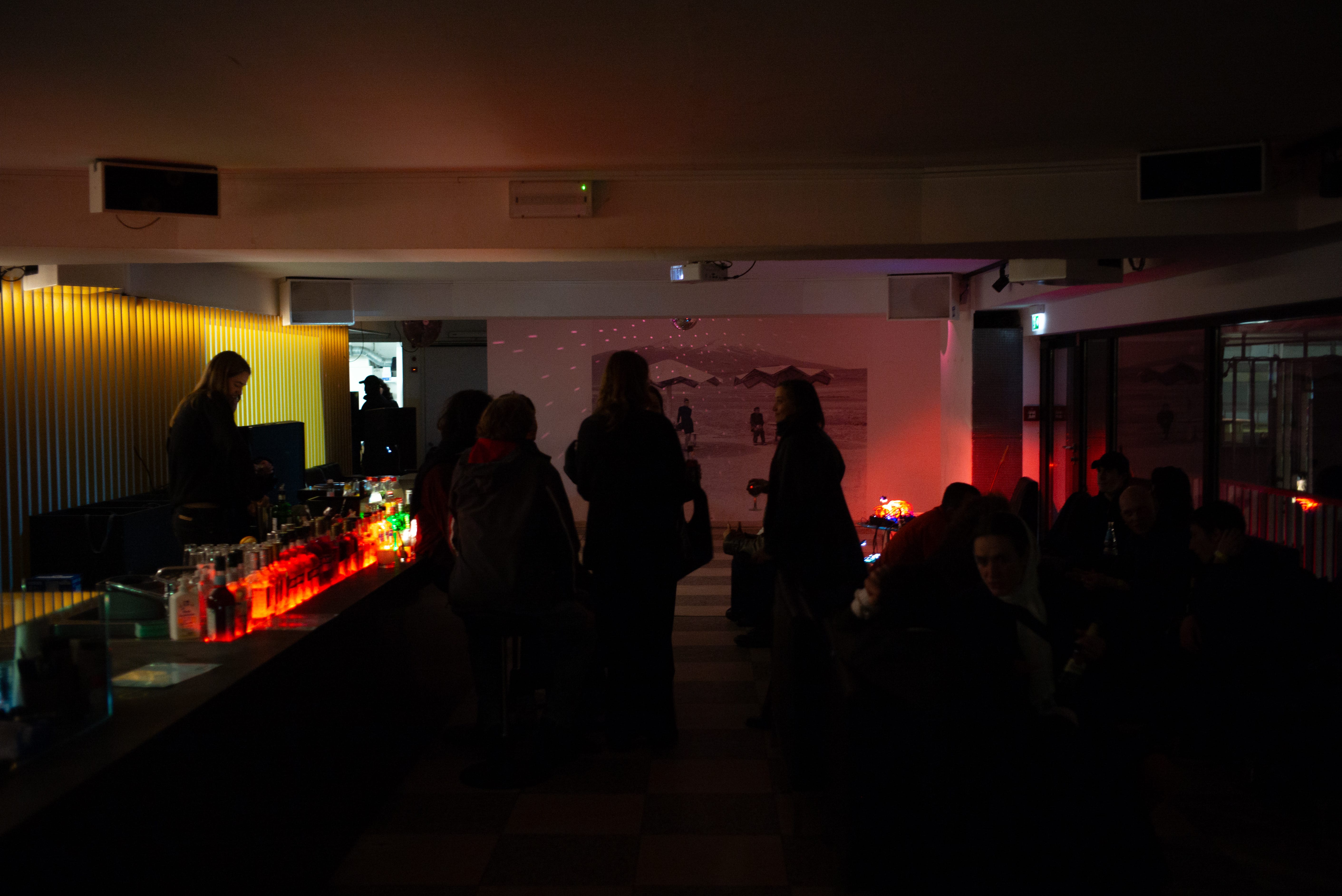
Audio excerpt: Room recording of an active RCF at Salon des Amateurs, Düsseldorf.
Why this matters now
We live in a culture saturated with stimulation, optimization, and performance.
Attention is constantly pulled, measured, compared, and monetized. Even rest is often framed as something to achieve, manage, improve or optimize.
In that context, environments that don’t demand engagement, reaction, or productivity become increasingly rare and quietly essential. Not as an escape from the world, but as a way of staying in it without being continuously fragmented by it.
Environmental calibration isn’t a spectacle, and it isn’t a solution. It doesn’t promise change, insight, or transformation. It works at a more foundational level, by gently rebalancing the conditions under which we gather — conditions that shape how we listen, how we relate, and how available we are to one another before we even realize it.
This kind of work doesn’t replace concerts, talks, or performances. It sits underneath them, or alongside them, influencing how they’re received rather than adding another layer of content. It tends to what’s already there: the space, the bodies in it, the time being shared.
What’s at stake isn’t doing less, but having a place where attention doesn’t need to be managed — where experience isn’t constantly pulled into foreground and evaluation, and where presence can reorganize itself without instruction.
The invitation is to arrive without needing to perform, improve, or interpret: to share time and space without pressure, and to notice what becomes possible when the conditions themselves are cared for.